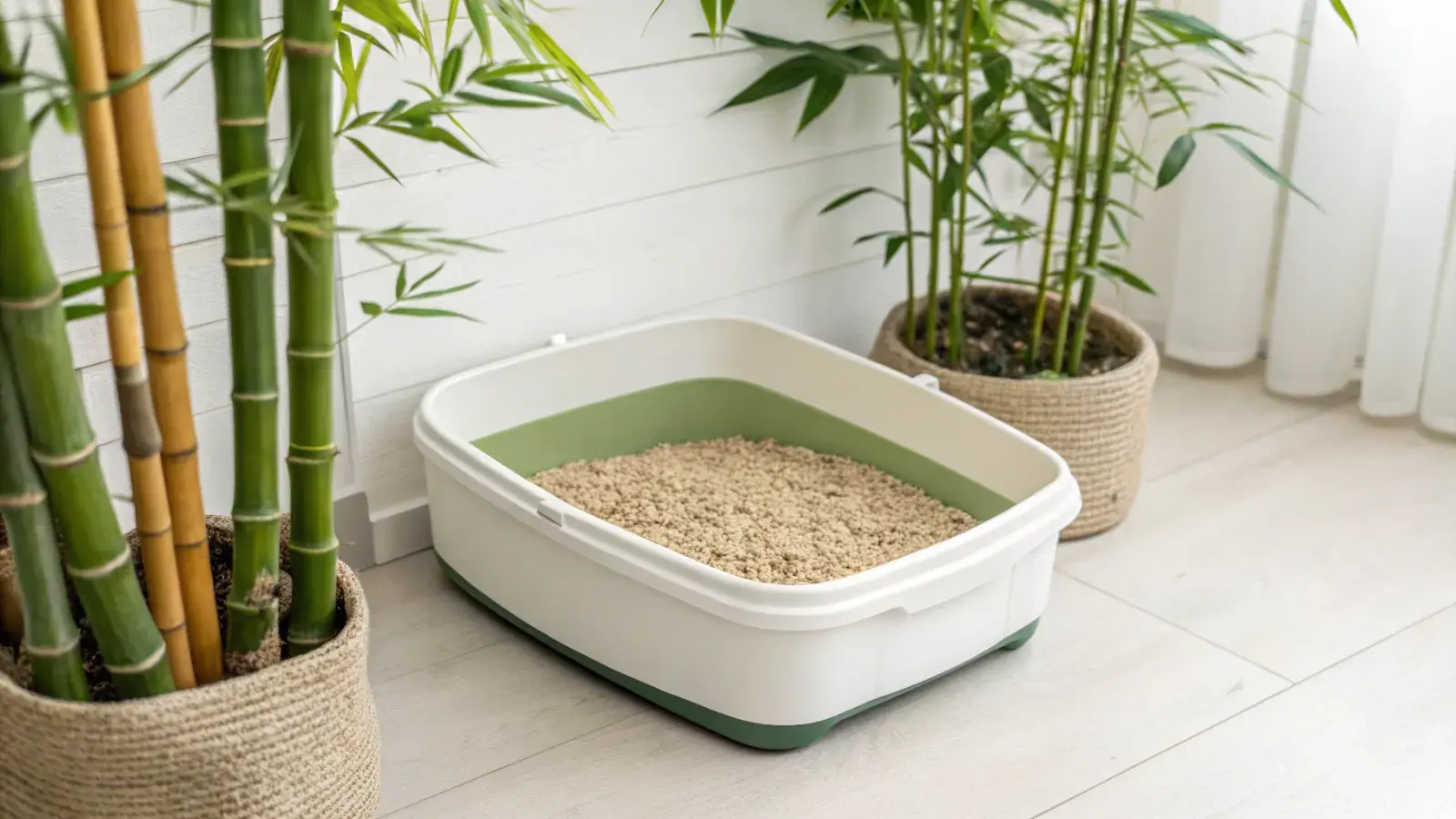
Bamboo Cat Litter: Pros, Cons and How to Switch
Bamboo cat litter is made from bamboo fiber instead of mined clay.
Quick Facts
What is Bamboo Cat Litter?
Bamboo cat litter is made from processed bamboo fibers. Clumping clay litter is made with bentonite, which is surface-mined. Bamboo litter skips the pit.
Pros and Cons
Advantages
- Made from plant fiber, not mined clay
Disadvantages
- Some cats need time to adjust
- Not for flushing or home compost once used
How Bamboo Litter Compares to Clay
A clay litter maker says its own clumping clay litter is not biodegradable. On the other side, cats in a 2025 study preferred clumping clay litter. We found no independent test of bamboo litter's dust or odor control. If smell is a worry, you can add an activated carbon supplement to the box.
Tips for Switching to Bamboo Litter
Cats can be particular about their litter. Here's how to make the transition smooth:
- Gradual transition: Mix 25% bamboo with 75% old litter for the first week. Increase bamboo by 25% each week until fully transitioned.
- Maintain depth: Keep the same litter depth your cat is used to.
- Same box location: Don't move the litter box during the transition period.
- Watch for signs: If your cat starts avoiding the box, slow down the transition.
Is Bamboo Litter Right for Your Cat?
Cats generally prefer sandy, clumping litter. If your cat is fussy, pick a clumping bamboo litter and switch slowly.
Curious how activated carbon works on litter odor? See how it works, or read the science behind activated carbon.