Tofu Cat Litter: The Asian Sensation
Already a bestseller across Asia, tofu (soy-based) litter is winning over Western cat owners with its unique combination of features.
Quick Facts
What is Tofu Cat Litter?
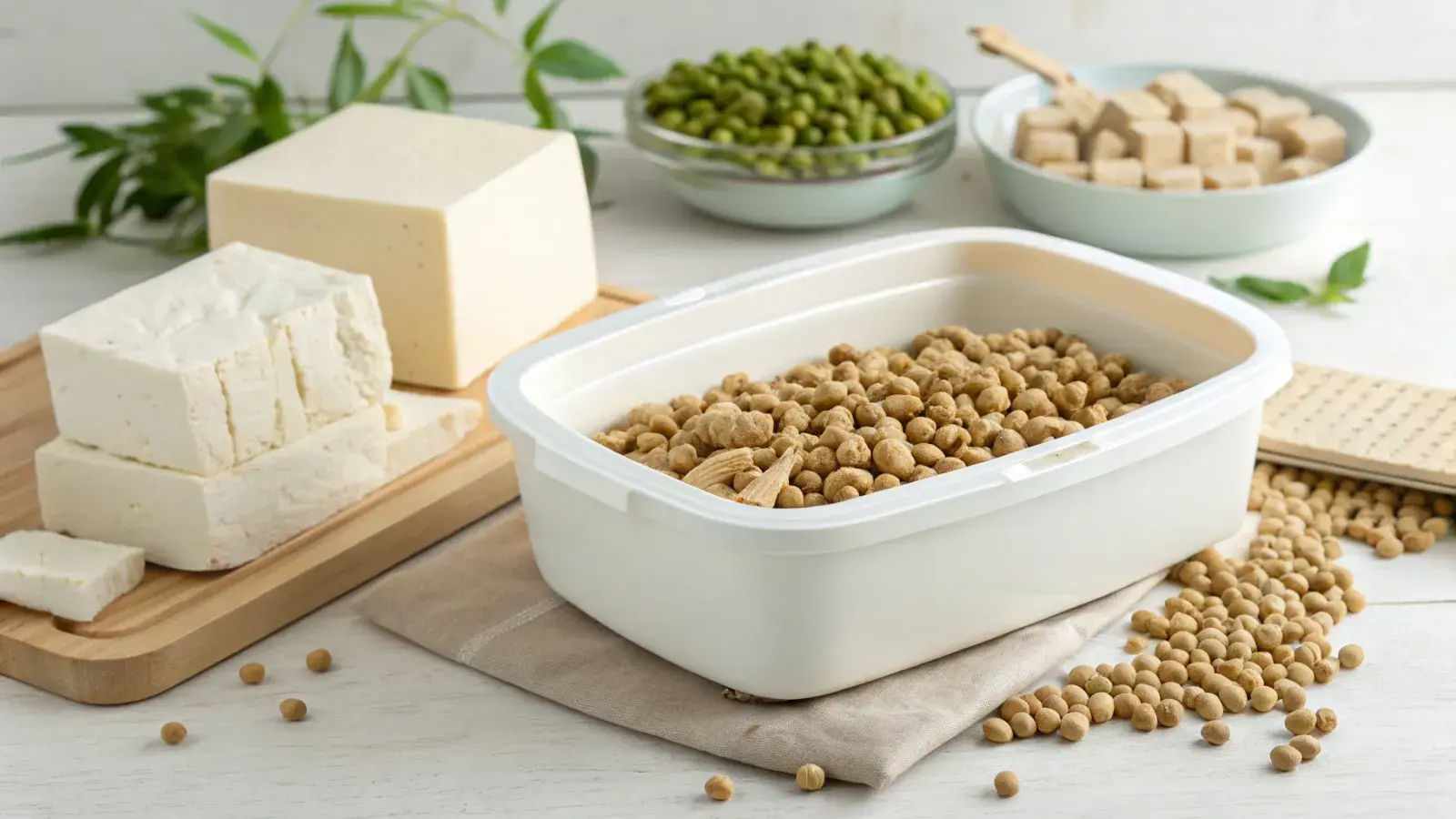
Tofu cat litter is made from the pulp left over after soy milk production - the same process used to make human tofu. This soy fiber (called okara in Japanese) is typically discarded or used as animal feed, but innovative manufacturers discovered it makes an excellent cat litter.
The litter usually comes in small pellet form - cylindrical pieces about the size of a pencil eraser. This shape is distinctive among cat litters and gives tofu litter some unique properties.
A Global Phenomenon
Tofu litter has been the dominant eco-friendly cat litter in China, Japan, South Korea, and much of Southeast Asia for years. Millions of cats use it daily. Western markets are just beginning to discover what Asian cat owners have known for a decade: soy makes surprisingly good cat litter.
Why the Pellet Shape?
Unlike most litters that come in granules, tofu litter's cylindrical pellets offer distinct advantages:
- Less tracking: The larger pellet size means fewer particles stick to cat paws and travel around your home.
- Easy to see changes: It's easy to spot soiled pellets for removal.
- Quick absorption: Pellets absorb liquid rapidly and then clump together.
Pros and Cons
Advantages
- Very low tracking
- Virtually dust-free
- Lightweight
- Fast clumping
- Pleasant mild scent
Disadvantages
- Unfamiliar pellet texture
- Moderate odor control
- Can mold if stored improperly
- Some cats dislike pellets
- Not as available locally
- Soy allergy concerns
Disposal
Don't flush it - see our flushable cat litter guide. Bag used litter with household trash; see how to dispose of cat litter.
Texture and Cat Acceptance
The pellet format is the main adjustment for cats switching from traditional litter. Some cats take to it immediately; others need time:
- Cats who've used pellet-style wood litter transition easily
- Cats accustomed to fine-grain clay may initially hesitate
- Kittens learning to use litter for the first time often accept pellets readily
- Older cats with sensitive paws may appreciate the smoother pellet surface
If your cat resists pure pellets, some brands offer crushed tofu litter that has a finer texture.
Odor Control Reality
Tofu litter's odor control is good but not exceptional. It absorbs and contains odors reasonably well, but for heavy use or sensitive noses, you may want to:
- Scoop frequently - the clumps are easy to spot and remove
- Add an activated charcoal supplement for extra odor absorption
- Choose scented varieties if available (some brands add green tea or charcoal)
- Ensure good ventilation around the litter box area
For superior natural odor control, consider walnut or wood litter, or keep tofu and add a carbon supplement to it.
Perfect for Kittens
Tofu litter is one of the safest options for young kittens:
- If your kitten eats litter: Call your vet. Don't assume any litter is safe to swallow.
- Dust-free breathing: Young respiratory systems aren't exposed to harmful particles.
- Soft on developing paws: The smooth pellets are gentle on kitten feet.
Many breeders in Asia use tofu litter for their litters (of the feline kind) from birth through adoption.
Storage and Freshness
Like other plant-based litters, proper storage matters:
- Store in a cool, dry place in a sealed container
- Don't expose to humidity - soy can develop mold
- Check for any unusual smells before use
- Use within the recommended timeframe (typically 1-2 years)
Finding Tofu Litter
Tofu litter is becoming more available in Western markets:
- Online retailers: Amazon, Chewy, and specialty pet sites carry multiple brands.
- Asian grocery stores: Some carry pet supplies including tofu litter imported from Asian manufacturers.
- Natural pet stores: Eco-focused retailers are increasingly stocking tofu options.
- Big-box pet stores: Slowly adding tofu litter to their eco-friendly sections.
Tofu vs. Other Plant Litters
How does tofu compare to other eco-friendly options?
vs. Corn: Tofu tracks less but has slightly weaker odor control. Both clump well.
vs. Wheat: Wheat's enzymatic odor control is superior.
vs. Wood pellets:Similar pellet format, but tofu clumps while wood typically breaks down into sawdust.