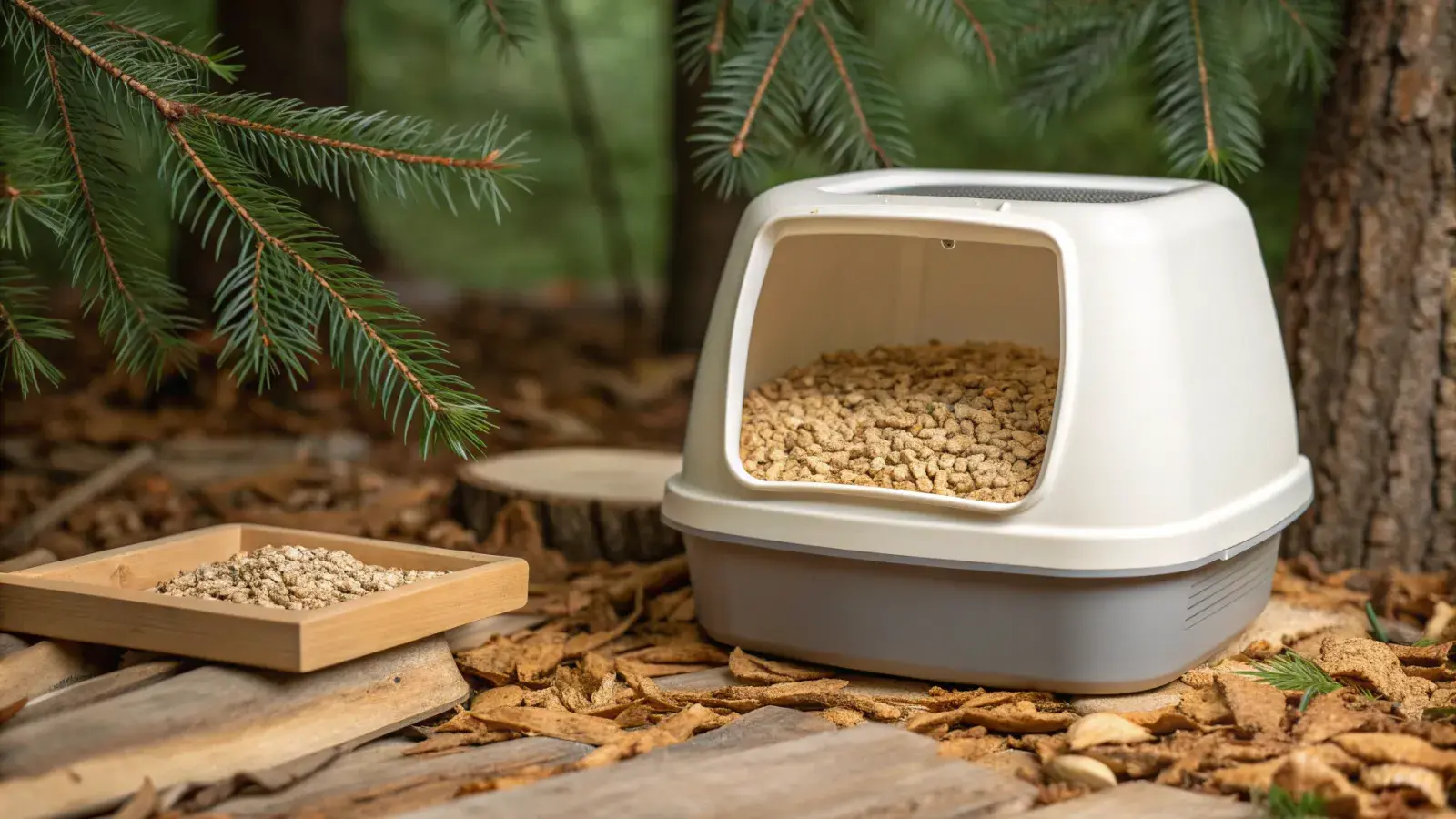
Wood Pellet Cat Litter: Pellets, Shavings, Sawdust and Stove Pellets
Wood pellet cat litter is compressed wood that crumbles into sawdust when your cat uses it. Below: how pellets compare with shavings, sawdust and the heating pellets, which wood litters clump, and what the safety research does and does not show.
Quick Facts
What Is Wood Pellet Cat Litter?
It is wood pressed into small pellets. When urine hits them, the pellets "break down into sawdust and settle to the bottom of the litter box, leaving fresh pine pellets on top," in the words of Feline Pine's directions. Pine is one of the woods used. Feline Pine says its wood is "kiln-dried shavings reclaimed from lumber production."
That is the whole system: no clumps, no scooping out wet balls. You scoop the solids, sift or pour off the sawdust, and top up with fresh pellets.
Pellets vs Shavings vs Sawdust vs Stove Pellets
People search for all four as cat litter. They are not the same thing, and the evidence behind each is thin. We confirmed what we could.
Wood pellets sold as cat litter
Made and labelled for litter boxes. The maker tells you what is in the bag and how to use it. This is the option with the clearest paper trail.
Loose wood shavings
We found no source showing loose shavings are safe as cat litter. One study of lab animal bedding found pine shavings had 18 times more small dust particles than a eucalyptus pulp bedding, and the most ammonia of the beddings tested. That was in rodent cages, not litter boxes, but it is the closest data there is.
Sawdust
Pellets turn into sawdust in the box, which is expected. Starting with loose sawdust is a different matter: we found no source that tests it as a litter. If you need a short-term stand-in, the ASPCA names shredded paper or a paper litter for the week after surgery.
Wood stove and horse bedding pellets
They look like litter pellets, which is why people ask. The catch is what else can go in. Certified heating pellets may contain up to 2% additives such as cornmeal, starch, vegetable oil, potato meal or lignin. So you cannot assume a stove pellet is plain wood. Only a bag that says "no additives" tells you that. We found no study of cats on stove or horse bedding pellets.
What "kiln-dried" tells you
Wood litter brands say their wood is kiln-dried. You will often read that kiln-drying removes phenols and makes softwood safe for cats. We looked for a veterinary or peer-reviewed source for that and found none. Treat "kiln-dried" as the maker's description of how the wood was processed, not as a safety test.
How to Use Wood Pellets for Cat Litter
- Fill the box with pellets. Fresh pellets stay on top, and wet ones crumble and sink.
- Scoop solids every day. The CDC says to change the litter box daily, because the Toxoplasma parasite does not become infectious until 1 to 5 days after a cat sheds it.
- Remove the sawdust. A sifting box makes this easier: whole pellets stay in the top tray and sawdust falls through.
- Switch slowly. Cats generally prefer sandy, clumping litter, so a pellet is a big change underfoot. Mix pellets into the old litter and watch that your cat keeps using the box.
We found no independent study on how well wood pellets control litter box smell. If smell is the problem in your house, Purrify activated carbon is one thing you can add to a pellet box.
Does Wood Pellet Litter Clump?
Plain pellets do not. Clumping wood litter does exist, and it is made differently. Okocat describes its litter as natural wood fibre that "absorbs liquid on contact to form solid clumps." Feline Pine Clumping lists "natural pine and clumping agent, plus mineral oil for dust control," without naming the agent.
The usual binder in plant litters is guar gum. USDA researchers call it "the principal gum used" as a clumping agent in biodegradable cat litters. A USDA Agricultural Research Service team built an experimental litter from eastern red cedar, guar gum and food-grade mineral oil. Their follow-up reported it cut dust by 60% compared with sodium bentonite clay litter. The same team notes that cat owners prefer litters where 60% or more of the material clumps.
Clumping matters for cats too. The 2025 iCatCare consensus guidelines on urinary tract disease recommend sandy, clumping-style litter and list non-clumping litter among the risk factors for feline idiopathic cystitis. If your cat has had bladder trouble, that points to a clumping litter rather than plain pellets. Ask your vet.
Is Wood Litter Safe for Cats?
Nobody has tested it in cats, as far as we can find. There is no cat study showing wood litter is harmful, and none showing it is safe.
The phenol worry comes from lab animal studies. In 1967, mice and rats kept on red cedar, white pine or ponderosa pine bedding showed raised liver enzymes, which went back down on hardwood bedding. A 2007 study found no significant change in rabbits housed above pine shavings for up to 14 days. Animals living on bedding around the clock are not cats visiting a box a few times a day, so neither study settles the question.
What you can do: buy pellets made for cats or labelled no additives, skip heavily scented products, and watch your cat. Eating the pellets, or any change in how your cat uses the box, is a reason to call your vet.
Wood Pellet Cat Litter Pros and Cons
Advantages
- Made from wood, not mined clay
- Some brands use kiln-dried wood reclaimed from lumber production
- Clumping versions use plant binders like guar gum
- Toronto's Green Bin takes it (check your own city)
Disadvantages
- Plain pellets do not clump
- Cats generally prefer sandy, clumping litter
- No safety study in cats
- Heating pellets can contain additives
- Should not be flushed or home-composted once used
Wood vs Clay Litter
Clay litter is mostly bentonite. According to the US Geological Survey, 48% of US bentonite goes to pet waste absorbents. In Wyoming, home to as much as 70% of the world's known supply, all bentonite comes from surface mining. One clay litter maker, Dr. Elsey's, says its clumping clay litter "is not biodegradable."
Cats see it differently. In a 2025 study, cats preferred clumping clay litter. And on smell, we found no independent study that ranks wood against clay. If odor is what keeps you on clay, see how activated carbon traps odor and decide whether adding it to a wood box closes the gap for you.
How to Dispose of Used Wood Litter
- Do not flush it. California law requires every cat litter sold there to tell buyers not to flush it. UC Davis researchers say wastewater treatment does not kill Toxoplasma oocysts, which have been linked to sea otter deaths.
- Do not home-compost it. A USDA-backed composting guide says "We do not recommend adding cat waste or cat litter to your compost," and the EPA says meat-eater waste does not belong in a compost pile. One pellet brand's directions suggest using spent litter as mulch. These sources say otherwise.
- Bag it for the trash, unless your city says otherwise. Toronto's Green Bin accepts wood pellet cat litter. Seattle says cat litter always goes in the trash. Check your own city's rules.
Keeping a Wood Litter Box Fresh
Daily scooping does most of the work. For the rest, Purrify is an activated carbon litter additive sold in bags. It holds a 5.0 Google rating and is stocked in 40+ pet stores across Canada. See Purrify bag sizes.