Paper Cat Litter: Pellets, Crumbles and Shredded Paper
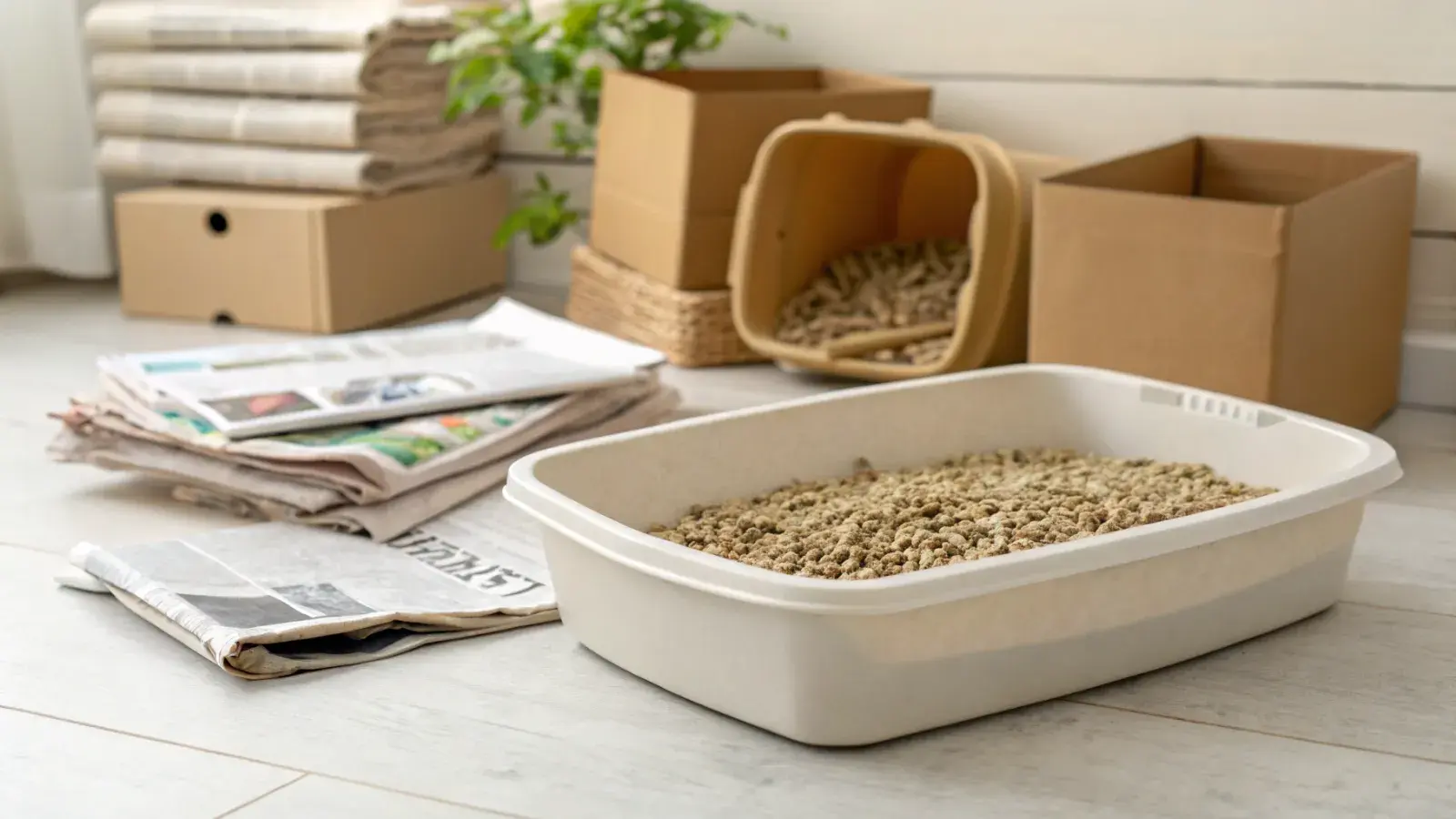
Paper pellet cat litter is recycled paper formed into small pellets. It is one of three forms of paper cat litter, next to crumbles and plain shredded paper. The ASPCA and a university vet hospital both name paper for cats recovering from surgery. This guide covers how the forms differ, what the bags say about recycled content, how often to clean the box, and where the evidence runs out.
Paper Cat Litter at a Glance
Paper Pellets vs Crumbles vs Shredded Paper
Paper litter comes in two shapes you can buy and one you make at home. We found no study that compares them head to head in cats, so this is what each one is, not a ranking.
Paper pellets
Small cylinders of recycled paper. Yesterday's News, made by Purina, sells its pellets as non-clumping, 99.7% dust-free and three times more absorbent than clay by volume. Fresh News makes the same three-times claim and says its litter is 99% dust-free. These are the makers' own figures. We found no independent test that checks them.
Paper crumbles
Some brands sell paper as loose, irregular crumbles instead of pellets, such as ExquisiCat Multi-Cat Paper Crumbles at PetSmart. We found no source comparing crumbles with pellets on dust, smell or how readily cats use them, so be wary of anyone who claims one beats the other.
Shredded paper
Plain shredded paper is what the ASPCA and WSU tell owners to use for a week or so after surgery (see below). That advice is short term. We found no source on using it for months, on whether newspaper ink is safe for cats, or on how well plain office paper absorbs urine.
How Much Recycled Paper Is in Paper Cat Litter?
Fresh News says its litter is made with 100% recycled paper. Yesterday's News says "made with recycled paper" but gives no percentage on the package text we read. We saw figures for other brands only in search snippets, never on a page we could open, so we left them out.
If recycled content is why you are buying paper, look for a stated percentage on the bag, not just the word "recycled".
Paper Litter After Surgery: What Vets Say
This is the one use with clear veterinary backing. The ASPCA's post-surgery instructions say litter dust can get into the surgery site of male cats and cause an infection. They advise shredded paper, Yesterday's News, or uncooked long-grain rice in the litter box for at least a week after surgery.
Washington State University's Veterinary Teaching Hospital tells owners to use shredded paper instead of litter for 7 to 10 days after declaw surgery.
The two sheets give different time spans because they cover different operations. Follow the discharge sheet your own vet gives you. Purina also markets Yesterday's News as the "No. 1 recommended cat litter following surgery", which is the maker's own claim.
How Often to Change Paper Pellet Cat Litter
Purina's directions for Yesterday's News: put 2 to 3 inches of pellets in the box and remove waste daily. The CDC gives the same daily rule for a health reason. The Toxoplasma parasite does not become infectious until 1 to 5 days after a cat sheds it in its feces, which is why daily cleaning matters.
How often to dump every pellet and start fresh is a different question. We found no reliable source for it, so we will not give you a number. We also found no source on how to spot urine in paper pellets. Your brand's directions are the best guide for both.
If the box smells between full changes, see how activated carbon works on litter odor.
Is Paper Cat Litter Good for Cats? What the Research Shows
Paper has some points in its favour and one real question mark.
- Vet backing after surgery: the ASPCA and WSU sheets above.
- Dust, in lab-animal bedding: a 1996 study found 18 times more fine dust in pine shavings than in eucalyptus pulp, and the pulp absorbed 35% to 76% more water than pine shavings and vermiculite. Eucalyptus pulp is not recycled newspaper and rodent bedding is not cat litter, so read this as a hint.
- Liver enzymes, in rabbits: rabbits housed above recycled paper bedding for up to 14 days showed no significant change in the liver enzymes measured.
The question mark is texture. The 2025 iCatCare consensus guidelines on urinary tract disease recommend sandy, clumping-style litter and list non-clumping litter among the risk factors for feline idiopathic cystitis. A 2025 study in the Journal of Veterinary Medical Science found cats preferred clumping clay litter. Yesterday's News does not clump. If your cat's litter box habits change after a switch to paper, talk to your vet.
Wondering about pine pellets instead? We found no head-to-head test of pine and paper pellets in cats. Our wood litter guide covers pine as one kind of wood pellet.
Paper Litter and Smell
The maker claims we read are about dust and absorbency, not odor, and we found no independent test of how well paper litter holds smell. Daily scooping, above, is the part that is backed by evidence.
If smell is what puts you off paper, you can keep the litter and add to it. Purrify is an activated carbon additive, sold in bags, that goes in the box with the litter you already use. It has a 5.0 Google rating and is stocked in 40+ pet stores across Canada.
Disposing of Used Paper Litter
Do not flush it. California law requires every cat litter sold there to carry a warning against flushing. UC Davis researchers traced fatal Toxoplasma strains in sea otters to cats on land, and say wastewater treatment does not kill the parasite's eggs. Their advice, and Seattle Public Utilities', is to bag cat waste and put it in the trash.
Do not compost it at home. Fresh News says its litter can be composted and used as mulch. Public guidance disagrees for used litter: a USDA-backed composting guide says "We do not recommend adding cat waste or cat litter to your compost", and the EPA says waste from meat-eating pets does not belong in a compost pile.
Check your city. Rules differ. Toronto's Green Bin takes pet droppings and clay and wood pellet cat litter (paper litter is not named), while Seattle says cat litter always goes in the trash.
In the trash, expect slow breakdown. Paper can break down, but the FTC notes that landfills do not offer conditions for complete decomposition within a year. We found no reliable figure for how long paper litter takes to break down, so we will not quote one.
Pros and Cons
Advantages
- Named by vets for use after surgery
- Made with recycled paper (100% for Fresh News)
- Makers claim 99% to 99.7% dust-free
- Makers claim 3x the absorbency of clay by volume
Disadvantages
- Yesterday's News does not clump
- Vet guidelines say cats generally prefer sandy, clumping litter
- No independent odor tests found
- Not for flushing or home compost once used
Paper makes the most sense while your cat recovers from surgery, or when you want recycled content and are happy to scoop daily. For everyday use you might compare it with wood, or read the science behind activated carbon if smell is your main worry.
Frequently Asked Questions
Explore Other Eco-Friendly Options
Sources
- ASPCA, caring for your pet after surgery (PDF)
- Washington State University Veterinary Teaching Hospital, feline declaw discharge (PDF)
- CDC, preventing toxoplasmosis
- iCatCare 2025 consensus guidelines, lower urinary tract disease, J Feline Med Surg
- Iwabuchi-Inoue et al. 2025, J Vet Med Sci
- Potgieter and Wilke 1996, Laboratory Animals (bedding dust and ammonia)
- Ruben et al. 2007, JAALAS (rabbit bedding)
- Yesterday's News package text (retailer copy)
- Fresh News product details (distributor copy)
- California Fish and Game Code 4501
- UC Davis, sea otters and Toxoplasma (2019)
- USDA NRCS / Fairbanks SWCD, Composting Dog Waste (PDF)
- EPA, Pet Care fact sheet (PDF)
- Seattle Public Utilities, pet waste
- City of Toronto, what goes in the Green Bin
- FTC Green Guides, 16 CFR 260.8 (degradable claims)